
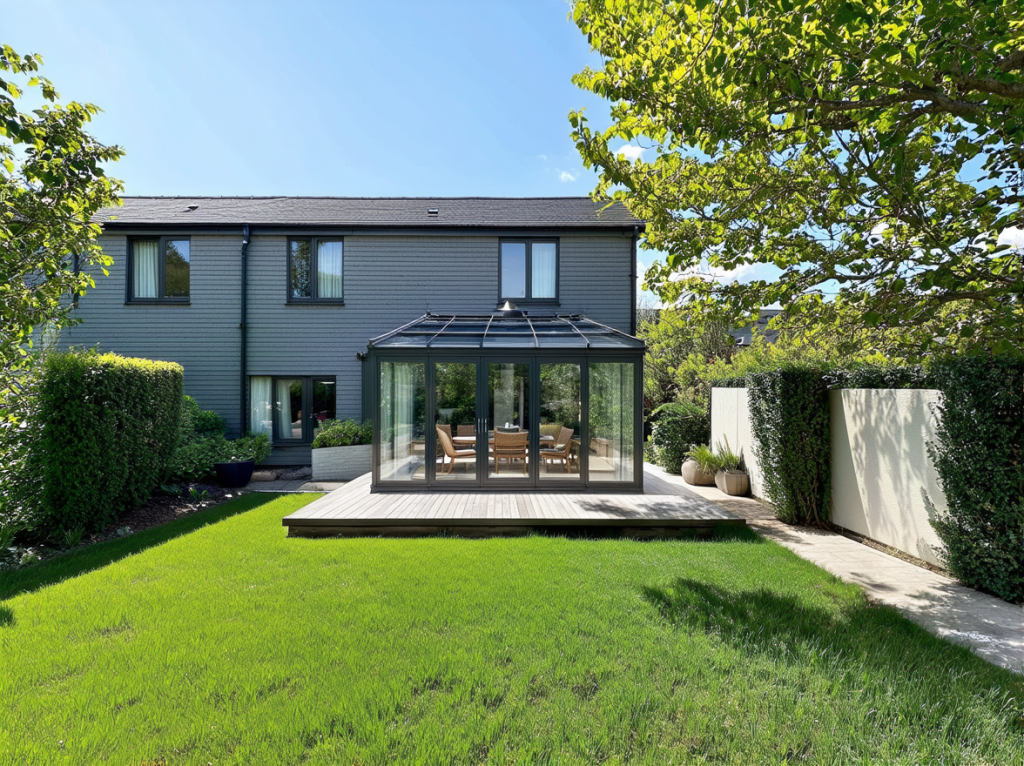
Replacing a conservatory roof in the UK typically costs between £4,000 and £15,000+, depending on the material you choose — polycarbonate, glass, or solid/tiled — as well as the size of your conservatory, your location, and whether structural work is needed. A complete quote should cover labour, materials, waste removal, and any Building Control fees.
Getting a quote for a new conservatory roof can feel like reading a foreign language. Some quotes are short on detail; others list items you’ve never heard of. And when you’re comparing three different numbers from three different tradespeople, it’s hard to know whether you’re comparing like for like.
This guide takes the guesswork out of it. You’ll learn what every line of a quote should cover, where hidden costs tend to appear, what red flags to watch for, and how to avoid overpaying — or under-specifying — your new roof.
Whether you’re replacing a tired polycarbonate roof that turns your conservatory into a greenhouse every summer, or upgrading to a solid tiled finish that makes the space usable year-round, the figures and frameworks here apply to you.
How Much Does It Cost to Replace a Conservatory Roof in the UK?
Conservatory roof replacement costs in the UK generally fall between £4,000 and £15,000+, though the actual figure depends on several key variables. According to Checkatrade’s 2026 UK price guide, a standard 3m × 4m conservatory roof replacement costs around £5,000–£8,000, with average costs reaching approximately £10,000 across all roof types.
Here’s a quick breakdown by material:
| Roof Type | Typical Cost Range | Best For |
|---|---|---|
| Polycarbonate | £4,000–£7,000 | Budget-conscious upgrades |
| Glass (thermally efficient) | £5,000–£10,000 | Light retention + insulation |
| Solid/Tiled | £8,000–£15,000+ | Year-round comfort |
Costs per square metre also vary significantly. Thermally efficient glass panels typically run £100–£250 per m², while lightweight tiled systems can reach £600–£900 per m² installed, according to industry data from Checkatrade.
What drives the price up or down?
- Size — A larger footprint means more materials and more labour hours
- Material choice — Solid roofs require more components and often more structural preparation
- Location — Labour rates are higher in London and the South East
- Structural condition — Older frames may need reinforcement before a new roof can be fitted
- Access — Difficult or restricted access to the roof adds time and cost
Understanding these variables upfront means you can hold any quote to account before you sign anything.
What Should Every Conservatory Roof Quote Include?
A complete, trustworthy quote isn’t just a final number — it’s an itemised breakdown of every cost involved. If yours doesn’t include these components, ask for them in writing before proceeding.
Labour
Labour is typically the largest variable cost. Tradespeople generally charge a day rate (which varies by region and specialism), and the number of days required depends on the complexity of the job. A like-for-like polycarbonate swap may take one to two days; a full solid roof conversion can take a week or more.
Your quote should clearly state:
- The estimated number of days on site
- The day rate or total labour charge
- Who is carrying out the work (the company’s own team or subcontractors)
Materials
Every material used on the job should be listed separately. This includes:
- The roof panels or tiles (including make and specification)
- Glazing bars, ridge caps, and trims
- Fixings, sealants, and weatherproofing products
- Any insulation components
Vague references to ““roof materials”” without specification leave room for substitution after the quote is agreed. Insist on named products or system specifications.
Waste Removal and Skip Hire
Removing the old roof generates a significant volume of waste — glass, polycarbonate, and framing material all need to be disposed of responsibly. Some quotes include skip hire as standard; others add it as a separate line or leave it out entirely.
Confirm in writing: who is responsible for waste removal and at what cost?
Electrics
If your conservatory has roof-mounted lighting, Velux blinds with electric motors, or any wiring that runs through the existing roof structure, replacement work will likely require an electrician. This may not be included in a standard roofing quote. Check whether your tradesperson is coordinating this or whether you need to arrange it separately.
Plastering and Internal Finishes
Solid and tiled roofs require an internal finish — usually a plastered ceiling with insulation above it. This is frequently treated as a separate cost and can add £500–£2,000 or more depending on the size and finish required.
Your quote should state clearly whether internal plastering, coving, or decorating is included, or whether it is excluded.
Building Control Fees
Replacing roof coverings may require Building Regulations approval, particularly when a solid or tiled roof replaces a lightweight glazed structure. Building Control fees are typically paid to your local council or an approved inspector and are separate from the contractor’s charge. A complete quote will either include these fees or explicitly note that they are not included and provide an estimate of what they’ll be.
Skipping Building Control is not a shortcut — without the certificate of compliance, you may face problems when selling your home.
Where Hidden Costs Tend to Appear
Even a well-structured quote can contain surprises if certain items aren’t addressed upfront. Here are the most common ones.
Structural Reinforcement
Standard conservatory frames are designed to carry lightweight glazing, not heavy tiled roofing systems. According to guidance from the Local Authority Building Control (LABC) on solid conservatory roofs, replacing a glazed roof with a solid structure involves a change in loading that the existing frame may not be able to support without modification. This can mean additional steelwork, wall plate reinforcement, or even underpinning of the foundations — none of which will appear in a basic quote unless the contractor has carried out a proper structural assessment.
Ask specifically: Has the frame been assessed for the additional load of the proposed roof?
Building Regulations Compliance
The Planning Portal confirms that significant changes to thermal elements — which roofs qualify as — normally require Building Regulations approval and a thermal insulation upgrade to a current standard. If your contractor hasn’t factored this in, the cost of meeting those standards (additional insulation layers, for example) can arrive as a surprise mid-project.
Thermal Performance Upgrades
Even when swapping like for like — one glass roof for another — current standards for thermal performance under Part L of the Building Regulations are stricter than they were a decade ago. Your new roof may need to meet a specific U-value that the proposed specification doesn’t reach without additional insulation. This adds both materials cost and potentially more labour.
VAT
Most established contractors charge VAT at 20% on top of their quoted price. Check whether the figures in your quote are inclusive or exclusive of VAT — a £10,000 quote excluding VAT becomes £12,000 once it’s applied.
How to Compare Quotes Side by Side
Comparing three quotes only works if all three quote for the same scope of work. Use this framework to check:
| Cost Component | Quote 1 | Quote 2 | Quote 3 |
|---|---|---|---|
| Labour (total or day rate × days) | £ | £ | £ |
| Roof material (type + spec) | £ | £ | £ |
| Internal finish (plastering, etc.) | £ | £ | £ |
| Waste removal / skip hire | £ | £ | £ |
| Electrics (if applicable) | £ | £ | £ |
| Building Control fee | £ | £ | £ |
| VAT included? | Y/N | Y/N | Y/N |
| Total | £ | £ | £ |
If a component is missing from one quote but present in another, that isn’t a saving — it’s a cost that will surface later, either as an additional invoice or as work that simply doesn’t get done.
Citizens Advice recommends getting at least three written quotes before committing to any tradesperson, and specifically cautions against relying on verbal estimates rather than fixed-price written quotes.
Deposit and Payment Questions: What to Expect
Most conservatory roof contractors will ask for a deposit before work begins. This is standard practice, but the amount matters.
What’s reasonable:
- A deposit of up to 25% of the total project cost is considered normal for work of this kind
- Stage payments tied to milestones (e.g., on delivery of materials, on completion of installation, on final sign-off) are preferable to large upfront sums
- Payment by debit or credit card offers additional protection under chargeback schemes; a credit card payment between £100.01 and £30,000 may also be protected under Section 75 of the Consumer Credit Act
According to Citizens Advice guidance on home improvements, you should not agree to pay everything upfront, and if a contractor asks for a large deposit to cover materials, you can offer to purchase those materials directly instead.
The FMB’s Building Contract for Domestic Work (England and Wales) provides a clear template that covers payment schedules, permissions, Building Regulations approval, building control fees, and written confirmation that the work complies — worth referencing if your contractor uses a non-standard contract.
What to avoid:
- Paying 50% or more upfront before any work starts
- Cash-only payment requests (no paper trail, no card protection)
- Any arrangement where the final payment is due before you’ve had the chance to inspect the completed work
Red Flags to Watch for in a Conservatory Roof Quote
Most tradespeople are professional and straightforward. But a few warning signs in a quote are worth taking seriously.
The price is significantly lower than others
A quote that’s 30–40% below the other two doesn’t necessarily mean you’ve found a bargain. It may mean work has been omitted, substandard materials have been specified, or the contractor is underquoting to win the job and intends to raise costs once work is underway. Ask the contractor to explain exactly what makes their price different.
The quote is a single number with no breakdown
A single total with no itemisation tells you nothing about what’s included. If you can’t see the line items, you can’t verify what you’re buying.
No mention of Building Regulations or building control
For a solid roof replacement, this is not optional. A contractor who doesn’t raise it either hasn’t factored it in — or is planning to skip it. Either situation creates a problem for you.
Vague material descriptions
““High-quality roof tiles”” or ““insulated panels”” without brand, thickness, or thermal specification is not a material description — it’s a placeholder. The actual product installed could be very different from what you discussed.
Pressure to decide quickly
A reputable contractor will give you time to compare quotes and ask questions. Urgency tactics — ““we have a slot next week, but we need a deposit today”” — are a sign to slow down, not speed up.
No written guarantee or warranty
Any good contractor will provide a written guarantee on both workmanship and materials. If a quote doesn’t reference this, ask directly. For solid roof systems, an insurance-backed guarantee is worth requesting.
Frequently Asked Questions
How much does it cost to replace a conservatory roof in the UK in 2026?
Conservatory roof replacement costs in the UK range from approximately £4,000 for a basic polycarbonate roof on a smaller conservatory to £15,000 or more for a full solid or tiled roof installation on a larger structure. The average cost across all roof types is around £10,000, according to Checkatrade’s 2026 national pricing data. Your final cost will depend on your conservatory’s size, the material you choose, your location, and whether structural preparation is required.
Do I need building regulations approval to replace my conservatory roof?
You may well need Building Regulations approval, particularly if you are replacing a lightweight glazed roof with a heavier solid or tiled structure. According to GOV.UK, replacing roof coverings is among the alteration works that may require approval. Working without the necessary certification can cause issues when you come to sell your home. Always confirm with your contractor — or contact your local building control body directly — before work begins.
What is the most affordable conservatory roof replacement option?
Polycarbonate is the most affordable material, with total installed costs typically starting around £4,000 for a standard-sized conservatory. However, polycarbonate offers limited thermal performance compared to glass or solid alternatives. If year-round comfort and energy efficiency are your goals, thermally efficient glass or a solid insulated roof will deliver a better outcome, even at a higher upfront cost.
How long does a conservatory roof replacement take?
A polycarbonate or glass-for-glass replacement generally takes one to three days. A full solid or tiled roof conversion — which involves structural preparation, installation, and internal finishing — typically takes five to ten days, depending on the size of the conservatory and the number of tradespeople on site.
Should I get my conservatory roof quote reviewed before I sign?
Yes — especially if you are comparing multiple quotes or if any items are unclear. A quote review helps you confirm that all key components are covered, that the specification matches what you’ve been told verbally, and that you’re not committing to terms that leave you exposed if something goes wrong.
Review Your Quote Before You Commit
A new conservatory roof is a significant investment. Done well, it transforms an underused space into a comfortable room you can enjoy throughout the year — warmer in winter, cooler in summer, and quieter in all conditions.
Getting that outcome starts with the right quote. Not the cheapest one. The most complete one.
If you have a quote in hand and you’re not sure whether it covers everything it should, or if you want a second set of eyes before you sign, our team can review it with you. We’ll check the specification, flag anything that looks incomplete, and help you make a confident, informed decision.
Methodology & Editorial Process
This article synthesizes up-to-date UK industry pricing guides from Checkatrade with official government and building control sources to clarify cost factors and regulatory requirements for conservatory roof replacement. It integrates consumer advice on obtaining and comparing detailed quotes, emphasizing transparency and compliance with Building Regulations. The conclusions are drawn from referenced authoritative data and guidance, combined with practical tips to help readers understand typical costs, key quote components, and potential hidden fees, supporting informed decision-making.