
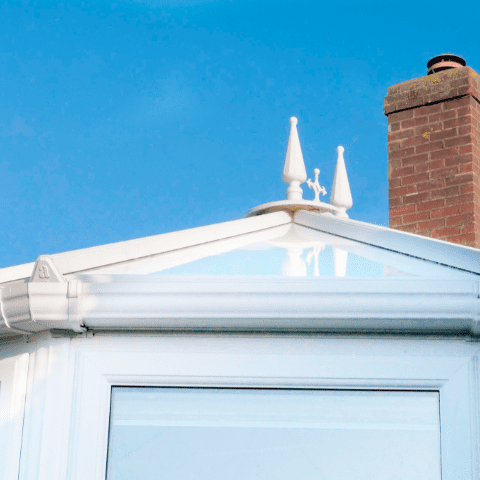
The right conservatory upgrade depends on how you want to use the space, your budget, and the condition of your existing structure. Options range from new glazing and thermal blinds (£500–£2,000) to a full roof replacement or garden room conversion (£7,875–£18,225+). This guide walks you through each option with a scoring worksheet to help you decide.
TL;DR:
This guide helps homeowners decide the best conservatory upgrade by aligning lifestyle needs, budget, and existing structure. It compares options from low-cost thermal blinds to full roof replacements, highlighting trade-offs in comfort, natural light, cost, disruption, and planning requirements. Using scenarios and a scoring worksheet, readers can prioritize their goals for a practical, customised solution.
Too hot in summer. Too cold in winter. A room you walk past more than you walk into. If that sounds familiar, you already know your conservatory needs attention — you just don’t know where to start. The options are genuinely wide: new glass, a solid roof, insulated panels, a full extension. Each one comes with its own cost, disruption level, and set of trade-offs.
The good news is that choosing the right conservatory upgrade doesn’t need to be overwhelming. What it does need is a clear framework — one that starts with how you want to use the space, then works backwards to the solution that fits your life and your budget.
That’s exactly what this guide gives you. Work through it section by section, use the scoring worksheet at the end, and you’ll leave with a shortlist rather than a headache.
Start with the Room You Want: Lifestyle Diagnostic
Before comparing costs or materials, define what you actually want from the space. Your upgrade choice should serve your life — not the other way around.
Ask yourself these questions:
- How do I want to use this room? Home office, dining room, playroom, reading room, guest bedroom, yoga studio?
- How many months of the year do I want to use it? Year-round or just spring through autumn?
- Who uses it most? Young children, older relatives, remote workers, or occasional guests?
- How important is natural light to me? Is the bright, airy feel part of the appeal, or am I happy to trade some light for better insulation?
- Do I want this space to feel like part of the house? Or is a garden-room aesthetic — more separate, more outdoorsy — what I’m after?
Your answers will narrow the field significantly. A home office used Monday to Friday in all weathers demands a different solution to a dining room you only use for Sunday lunches in spring and summer. Here are three common scenarios to illustrate this:
- The year-round office: Consistent thermal comfort is non-negotiable. You’ll likely need a solid or tiled roof replacement and upgraded glazing. Insulated panels can also work well as a faster, lower-cost alternative.
- The occasional dining room: Seasonal use means you can get significant benefit from glazing upgrades and thermal blinds without committing to a full roof replacement.
- The family playroom: Noise reduction, safety glazing, and year-round warmth all matter here. A solid roof with Low-E glazing on the walls is usually the best combination.
Current Problem Checklist
Identifying your existing problems is just as important as identifying your goals. Tick each issue that currently applies to your conservatory:
- ☐ Too hot in summer — unbearable from May to September
- ☐ Too cold in winter — unused from October to March
- ☐ Draughty around window frames or roof joints
- ☐ Leaking roof or water ingress
- ☐ Condensation on glass or surfaces
- ☐ High heating costs relative to the time spent in the room
- ☐ Noise from rain on a polycarbonate or glass roof
- ☐ Poor natural light due to dirty, yellowed, or tinted polycarbonate
- ☐ Visible structural damage to frames or foundations
- ☐ Aesthetic mismatch with the rest of the house
If you ticked five or more, the fabric of the conservatory itself needs addressing — not just a surface-level fix. If you ticked one to three, targeted upgrades (better glazing, thermal blinds, insulated panels) may solve the problem without a major overhaul.
Solution Comparison Matrix
Here’s how the main upgrade options stack up across the factors that matter most:
| Solution | Typical Cost | Comfort Improvement | Light Retention | Disruption | Planning/Regs |
|---|---|---|---|---|---|
| Thermal blinds | £500–£2,000 | Low–Medium | High | Minimal | None |
| Solar-control / Low-E glazing upgrade | £1,500–£5,000 | Medium | High | Low | Usually none |
| Insulated roof panels | £4,000–£10,000 | High | Medium–High | Low (days) | Usually none |
| Polycarbonate roof replacement | From £6,300 | Low–Medium | High | Low | Usually none |
| Glass roof replacement | From £9,450 | Medium | Very High | Medium | Building regs likely |
| Tiled / solid roof replacement | From £7,875 | Very High | Low–Medium | Medium–High | Building regs required |
| Full conservatory replacement | £15,000–£40,000+ | Very High | Customisable | High | Planning + regs |
| Garden room / extension | £20,000–£80,000+ | Very High | Customisable | Very High | Planning + regs |
Cost data sourced from Checkatrade’s conservatory roof replacement cost guide.
Budget Tiers
Your budget shapes what’s possible. Here’s what each tier realistically delivers:
Tier 1: £500–£5,000 — Targeted Comfort Improvements
This range covers thermal blinds, upgraded solar-control glass in existing frames, and basic draught-proofing. Useful for homeowners who use their conservatory seasonally and want to extend that window by a few months. The Glass and Glazing Federation’s Consumer Guide to Conservatories explains how Low-E glazing and solar-control glass work together to reduce both heat loss in winter and solar heat gain in summer — a pairing that delivers meaningful comfort improvement without structural changes.
Tier 2: £4,000–£12,000 — Roof-Level Upgrades
This range is where most homeowners sit. Insulated roof panels, polycarbonate-to-glass upgrades, and tiled roof replacements all fall here. According to Checkatrade, polycarbonate roof replacement starts from approximately £6,300, tiled roofs from around £7,875, and glass roofs from approximately £9,450. Each option transforms year-round usability — particularly a tiled or solid roof, which is the single most effective upgrade for thermal comfort.
Tier 3: £15,000+ — Full Replacement or Extension
At this level, you’re effectively building a new room. Full conservatory replacements, garden rooms, and full extensions offer the highest comfort and longest lifespan, but they require planning permission, building regulations approval, and a significantly longer build time. These upgrades make the most sense when the existing structure is beyond repair, or when you want the room to function as a full habitable space with the same building standards as the rest of your house.
Comfort Impact: What Each Solution Actually Delivers
Comfort improvements aren’t equal across all options. Here’s what to expect from each:
Thermal blinds and shading reduce summer overheating and winter heat loss at the margins. They help — but they don’t solve the root problem of an uninsulated roof.
Low-E glazing retains heat in winter by reflecting internal warmth back into the room, while solar-control glass limits heat gain in summer. The GGF guide notes that orientation matters: south-facing conservatories benefit most from solar-control options, while north-facing ones should prioritise Low-E glass for winter warmth.
Insulated roof panels sit above and below the existing roof, creating a sealed thermal barrier. They retain more natural light than a solid tile replacement while delivering a significant improvement in temperature stability — warmer in winter, cooler in summer.
Tiled or solid roof replacement delivers the highest thermal performance of all roof options. The trade-off is reduced natural light from above, though wall glazing can compensate. This option transforms a cold, noisy conservatory into a room that genuinely functions like the rest of your home.
Disruption Level: What to Expect on the Day (and Week)
Installation disruption is a real concern — especially for families with young children or for those working from home. Here’s an honest breakdown:
- Thermal blinds / solar film: Half a day to one day. Minimal mess.
- Glazing upgrades: One to three days. Some dust from frame work; no structural changes.
- Insulated roof panels: Typically two to five days. Most work is internal; external scaffolding is rarely needed.
- Polycarbonate or glass roof replacement: Three to seven days. Scaffolding required; the room will be unusable during works.
- Tiled roof replacement: Five to ten days. Structural checks required beforehand (see below); scaffolding essential.
- Full replacement or extension: Eight to twenty weeks. Expect significant disruption to the surrounding area and access.
Before committing to any major roof replacement, check whether contractors include waste removal, scaffolding, and aftercare in their quote. The Which? conservatories guide recommends confirming whether planning or building regulation costs are included in quoted prices — not all contractors itemise these separately.
Planning and Building Regulation Considerations
This is where many homeowners get caught out. Most conservatory upgrades don’t require planning permission, but that changes once you start modifying the structure.
According to the Planning Portal, a conservatory is usually treated as permitted development — meaning no planning application is required — subject to specific size and placement conditions. However, significant structural work, including a solid roof replacement, typically triggers building regulations approval because the change affects the load-bearing elements, drainage, insulation, and sometimes electrics.
If you’re uncertain whether your planned upgrade is lawful, you can apply for a Lawful Development Certificate (LDC). This is a legal document confirming that your works are lawful without requiring full planning permission. LDC applications are decided within eight weeks and cost roughly half the normal planning fee for proposed works.
One important update to be aware of: for any breach of planning control occurring on or after 25 April 2024, the enforcement time limit has changed to ten years (previously four years for operational development). This affects undocumented past work and underlines why getting the right paperwork in place matters — especially if you plan to sell the property.
Structural Risk: What to Check Before You Commit
Replacing a lightweight polycarbonate or glass roof with a heavier tiled one places increased load on the existing framework and foundations. Not every conservatory is built to handle that.
The LABC’s guidance on solid roofs to conservatories classifies this type of work as a structural alteration, requiring assessment of the existing structure’s ability to carry the new loading. In practice, this means your installer — or a structural engineer — needs to check:
- Whether the existing wall plate and frame can bear the increased dead load
- Whether the foundations are adequate for the heavier structure
- Whether the adjoining house wall can support the new roof connection
A reputable installer will carry out this assessment before quoting. If a company offers to replace your roof without any structural inspection, treat that as a red flag. Always ask for written confirmation that structural suitability has been assessed and that building regulations approval has been obtained where required.
Natural Light Trade-Offs
Natural light is one of the main reasons people build conservatories in the first place. Some upgrades preserve it; others reduce it significantly. Here’s how to think about the trade-off:
Glass roof replacements maintain the highest light levels of all roof options. Pair them with Low-E glass to reduce heat loss without sacrificing brightness.
Insulated roof panels retain a meaningful level of natural light through the wall glazing, even though the roof itself becomes opaque. Many homeowners report that the improvement in comfort more than compensates for slightly reduced overhead light.
Tiled roof replacements reduce overhead light substantially. This is often offset by adding larger or higher-quality glazing to the walls, or by installing roof lanterns or skylights. If natural light is non-negotiable for you, discuss lantern options with your contractor before ruling out a solid roof.
Solar-control glass slightly reduces light transmission — typically by 10–20% depending on the product — in exchange for preventing overheating in summer. For south-facing conservatories, this is usually a worthwhile trade. For north-facing ones, prioritise thermal performance over solar control.
Resale and Documentation: What Buyers Will Ask
A well-documented conservatory upgrade adds value. A poorly documented one can delay or derail a sale.
Buyers and their solicitors will want to see evidence that any structural work complied with building regulations, and that planning rules were followed. Key documents to retain include:
- Building regulations completion certificate — required for any structural roof replacement
- Planning permission decision notice — if your works required it
- Lawful Development Certificate — if you applied for one
- FENSA or CERTASS certificate — for any replacement glazing
- Installer guarantees and warranty documentation — typically 10 years for roof panels and glazing
Keep copies of all of these. If you’re buying a property with an existing conservatory, ask the vendor to provide them. Missing documentation can be resolved through a retrospective LDC application, but it adds cost and delay.
When Not to Choose Each Option
Some options look appealing on paper but don’t fit every situation:
- Don’t choose a solid roof replacement if your existing conservatory frame shows signs of significant deterioration. Replacing the roof on a failing structure is wasted investment.
- Don’t choose insulated roof panels if the conservatory’s primary value to you is the light and airy feel. If you want a bright, plant-filled room, a glass roof with good Low-E glazing is a better fit.
- Don’t choose a full garden room or extension if you’re on a tight timeline or budget, or if your property sits in a conservation area where permitted development rights are restricted.
- Don’t choose glazing upgrades alone if your primary problem is an uninsulated roof. New glass in the walls won’t compensate for a polycarbonate roof that turns the room into a greenhouse in July and a freezer in January.
- Don’t choose any upgrade without getting at least three written quotes. The Which? guide specifically recommends requesting itemised quotes that confirm whether planning costs, building regulation fees, scaffolding, and waste removal are included.
Scoring Worksheet
Use this tool to score your top two or three options before booking a survey.
Rate each factor 1 (low priority) to 5 (high priority) for your situation:
| Factor | Your Score (1–5) |
|---|---|
| Year-round comfort is essential | |
| Budget under £10,000 | |
| Natural light must be preserved | |
| Minimal installation disruption required | |
| Structural work must be avoided | |
| High resale value is a priority | |
| Want the room to feel like part of the house | |
| Planning complications must be avoided |
What your totals suggest:
- High score on comfort + resale + ““part of the house””: A solid or tiled roof replacement is likely your best option.
- High score on light + low disruption + budget under £10,000: Insulated roof panels or a glass roof upgrade.
- High score on budget under £5,000 + avoid structural work: Glazing upgrades, solar-control glass, and quality thermal blinds.
Questions to ask every contractor you speak to:
- Does your quote include building regulations fees?
- Will you carry out a structural assessment before the roof replacement?
- What warranty do you offer, and is it backed by an insurance-backed guarantee?
- Are you FENSA-registered or a member of a trade body?
- What does the quote exclude?
Example Scenarios
Scenario 1 — The remote worker in a north-facing conservatory
Sarah, 42, wants to use her polycarbonate-roofed conservatory as a year-round home office. It faces north, so overheating isn’t the issue — cold and noise are. She chooses insulated roof panels (£6,500 installed) combined with Low-E wall glazing (£2,200). Total spend: £8,700. The room is usable within five days, and she retains enough natural light to work comfortably without additional lighting during daylight hours.
Scenario 2 — The growing family needing a playroom
James and Priya, both in their late 30s, want a safe, warm playroom for their three children. Their south-facing conservatory overheats badly in summer. They choose a tiled roof replacement (£11,500) with solar-control glass in the walls (£2,800). Building regulations approval is obtained. Total spend: £14,300. The room is used every day of the year, and the tiled ceiling dramatically reduces the noise the children make during naptime.
Scenario 3 — The couple preparing to sell
David and Helen, 58 and 61, plan to sell in two years. Their conservatory has an old polycarbonate roof and no building regulations paperwork for previous works. They invest in a glass roof replacement (£10,200) and obtain a retrospective LDC (£309 application fee). The estate agent confirms the upgraded, documented conservatory adds more to the asking price than the total cost of works.
Frequently Asked Questions
What is the 10-year rule for conservatories?
For any breach of planning control that occurred on or after 25 April 2024, local planning authorities have ten years to take enforcement action. For breaches before that date, the previous four-year rule applies to operational development. If your conservatory was built or altered without the necessary permissions, you can apply for a Lawful Development Certificate to confirm that enforcement action can no longer be taken — particularly useful if you’re preparing to sell.
Do I need building regulations approval to replace a conservatory roof?
Replacing a translucent roof with a solid or tiled one almost always requires building regulations approval. This is because the work constitutes a structural alteration that changes the loading on the existing framework. LABC guidance classifies this clearly. Replacing like-for-like (e.g., old polycarbonate with new polycarbonate) may not require approval, but always confirm with your local authority or a registered installer before proceeding.
What is the cheapest way to make a conservatory warmer?
Thermal blinds combined with draught-proofing represent the lowest-cost entry point — typically £500–£2,000. Upgrading to Low-E glazing in the wall panels (£1,500–£3,500) delivers a bigger improvement. For a year-round room, insulated roof panels (£4,000–£10,000) offer the best comfort-to-cost ratio without triggering building regulations in most cases.
How long does a conservatory roof replacement take?
A polycarbonate replacement typically takes three to five days. A glass roof replacement takes five to seven days. A tiled solid roof takes between five and ten days, depending on the size of the structure and whether scaffolding is required. Full conservatory replacements and extensions take considerably longer — typically eight to twenty weeks.
Will a conservatory upgrade add value to my home?
Generally, yes — provided the work is documented correctly. A well-insulated, year-round-usable room with a solid roof and proper building regulations certification adds functional square footage and is viewed positively by buyers. Undocumented or poorly finished work can have the opposite effect. Always keep your completion certificate, guarantee documents, and any glazing certificates.
What glazing should I choose for a south-facing conservatory?
A south-facing conservatory benefits most from solar-control glass, which limits summer heat gain. Combine this with Low-E coatings to retain warmth in winter. The Glass and Glazing Federation’s consumer guide recommends thinking about orientation when specifying glazing — the right combination depends on which direction the room faces and how much direct sunlight it receives.
Take the Next Step
You now have the framework to make an informed decision. The right conservatory upgrade exists for your situation — it just depends on how you want to use the space, how much you want to invest, and how much disruption you’re willing to accept.
Two actions to take today:
- Complete the scoring worksheet above — give each factor an honest score, then see which solution your priorities point toward.
- Book a no-pressure survey — a good installer will assess your structure, explain your options, and give you an itemised quote that includes all associated costs. No obligation, no hard sell.
The room you’ve been walking past could become the room you can’t imagine living without. The first step is simply knowing which upgrade is right for you.
Methodology & Editorial Process
The article draws conclusions by synthesizing comprehensive, UK-specific sources including official planning guidance, LABC structural advice, consumer group reports, and market cost data. It structures the discussion around priority-setting—lifestyle diagnostic, problem checklist, and budget tiers—supported by evidence-based trade-off analysis and regulatory context. This method ensures claims are grounded in up-to-date regulation and industry standards rather than anecdote, making the guide actionable and reliable.